
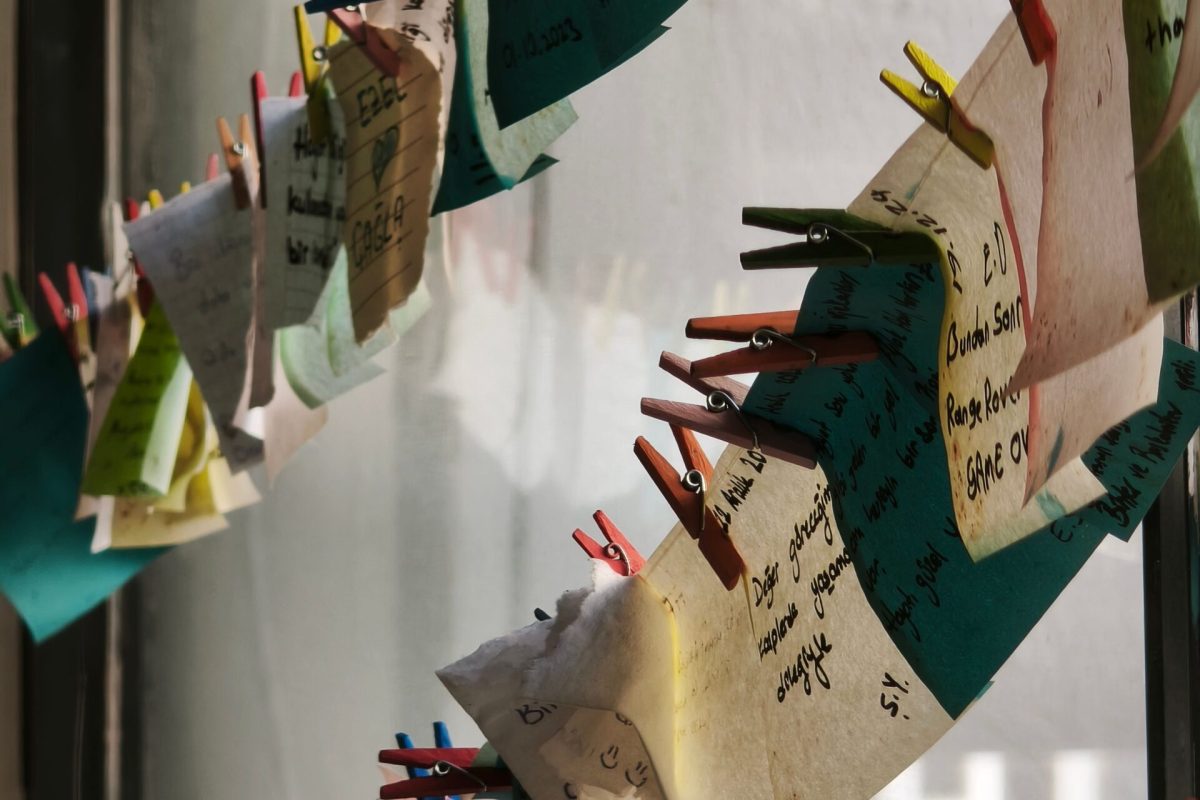
This is the first in a three-part series about what we stop noticing when we’ve been carrying it too long.
Part 2 is here. Part 3 is here.
It starts at home.
The list that runs itself
There is a list most women keep that no one ever sees.
It isn’t written down. It doesn’t live in an app or on a sticky note on the refrigerator. It lives in the background of your mind, running constantly, updating itself, flagging what’s urgent and what can wait and what you absolutely cannot forget this time.
Groceries. Appointments. Permission slips. The birthday coming up. Whether the car needs an oil change. What to do about the thing your kid said last week that’s been bothering you. Who needs to be where on Saturday. What you’re going to do about dinner Thursday when you have that meeting that runs late.
It never leaves your consciousness completely, and it never ends.
You probably didn’t notice when you became the keeper of this list. It just happened. Tasks needed doing, you did them, and eventually doing them became your job without anyone ever saying so. The list grew. Your awareness of it shrank. And one day you woke up and realized you were exhausted in a way that sleep didn’t fix, carrying a weight you couldn’t quite name.
That weight has a name. It’s called the mental load. And it is work, whether or not anyone in your life recognizes it as such.
What the mental load actually costs
The mental load isn’t just remembering things. It’s the planning, the anticipating, the coordinating, the noticing that something needs to happen before it becomes a problem. It’s the cognitive overhead of running a household, a family, sometimes a team at work, often all three simultaneously.
Research on this is consistent: women carry a disproportionate share of it, across income levels, across relationship structures, across cultures. And the women who carry it most heavily are often the ones who are also working full time, also showing up for aging parents, also being the emotional anchor for everyone around them.
What it costs is harder to measure than a grocery list. It costs the mental space you could have used for something else. It costs the rest you didn’t get because you were planning instead of sleeping. It costs the low-grade irritability that comes from being chronically over-extended. It costs the version of you that had bandwidth for her own thoughts, her own wants, her own life.
And because it’s invisible, because no one sees the list, the cost is invisible too. You just seem tired. You just seem a little short sometimes. You just seem like someone who can’t quite relax, even when there’s nothing urgent happening.
There is always something urgent happening. That’s the point.
How it becomes the background noise of your life
Here is how the invisible list gets invisible: you handle it so consistently, so reliably, so automatically, that everyone around you stops seeing it as something that requires effort. Including, eventually, you.
When you always remember the dentist appointments, remembering the dentist appointments stops being remarkable. When you always know what’s in the refrigerator, no one thinks to ask whether that’s a burden. When you always pick up the slack, the slack stops looking like slack. It just looks like Tuesday.
And you adapt. You get efficient. You build systems. You learn to run the list in the background while you’re doing other things, while you’re in meetings, while you’re having conversations, while you’re trying to sleep. You get so good at it that it stops feeling like a choice. It feels like just the way things are.
The danger isn’t only that you’re exhausted. The danger is that you’ve stopped noticing you’re exhausted in a particular way, for a particular reason, that has a particular name. You’ve normalized something that isn’t actually normal. You’ve accepted a distribution of labor that was never discussed, never agreed to, and never examined.
And that is exactly where we’ll pick it up next week.
Part 2 of The Invisible List moves outside the home – into the slower, quieter erosions that happen at work, in public, in the ten thousand small moments where women are reminded, subtly and not so subtly, of what is expected of them. The ones we stop registering because registering all of them would take everything we have.
If you recognized yourself in any of this, that recognition matters. Hold onto it.